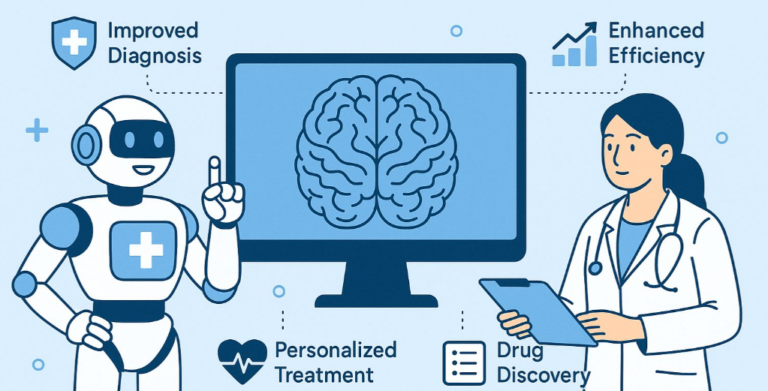
Benefits of AI-Driven Process Automation

AI-driven process automation yields measurable gains by reducing manual tasks and accelerating workflow throughput. It enhances data accuracy through AI-enabled decisioning and validation, while upholding governance with traceable lineage and auditable controls. The approach standardizes decisioning, improves speed, and lowers error rates across departments, enabling real-time processing and scalable efficiency. This balance of control and velocity invites further examination of how such systems can be integrated into existing architectures and governance frameworks.
What AI-Driven Automation Delivers to Your Biz
AI-driven automation delivers measurable improvements across operations by systematically reducing manual tasks, speeding workflow throughput, and enhancing data accuracy. The approach supports AI governance, ensuring accountability and compliance. Data lineage clarifies provenance and trust in outcomes, while automating decisions sustains consistent processes. Risk assessment identifies vulnerabilities early, guiding resilient strategy and informed investment in scalable, autonomous capabilities.
See also: Benefits of AI-Assisted Coding
How It Improves Accuracy, Speed, and Compliance
The previous discussion established how AI-driven automation reduces manual work and enhances governance; that foundation supports the current focus on accuracy, speed, and compliance.
AI-enabled decisioning reduces error likelihood through rule-based validation and continuous monitoring, delivering accuracy improvements.
In parallel, real-time processing and parallel workflows yield speed gains, while standardized traceability enforces compliance controls and auditable evidence for governance requirements.
Real-World Use Cases Across Departments
Across departments, AI-driven process automation demonstrates tangible, cross-functional value by automating repetitive tasks, standardizing decision logic, and accelerating workflows without sacrificing governance.
In finance, cycle-time reductions enable real-time reporting while preserving controls; in HR, onboarding accelerates with compliance checks.
Data privacy and change management frameworks ensure governance, risk mitigation, and user adoption, sustaining measurable efficiency gains across operations and executive dashboards.
How to Start: Key Steps to Implement Successfully
To begin implementing AI-driven process automation, organizations should first map end-to-end workflows to identify high-impact, repeatable tasks suitable for automation. A structured assessment follows: establish objectives, select scalable architectures, and define success metrics. Governance mechanisms must address AI ethics and data governance, ensuring risk controls, transparency, and accountability. Deployment emphasizes incremental pilots, measurable ROI, and disciplined change management for sustainable automation adoption.
Frequently Asked Questions
What Are the Potential Risks of Ai-Driven Automation?
AI risks include governance challenges, data privacy concerns, and misaligned incentives; cost considerations persist, while exception handling, creative automation, and strategic decision making require robust oversight to prevent operational drift and unintended consequences.
How Is Data Privacy Managed in Automated Processes?
“Precaution is the mother of safety.” Data privacy in automated processes is managed through data encryption and robust access controls, governing who can view, modify, or transfer information, while ongoing auditing detects anomalies and reinforces compliance in real time.
What Are the Initial and Ongoing Costs Involved?
Initial and ongoing costs include software licenses, infrastructure, integration, and maintenance. Cost considerations encompass training, support, and scalability. Implementation budgeting should account for risk buffers, vendor pricing models, and potential ROI timelines, balancing upfront expenditure with long-term efficiency gains.
How Do Automation Tools Handle Exception Management?
Automation tools orchestrate exception handling by predefining retry policies, fallbacks, and human escalation triggers; they log faults for audit, enabling fault tolerance while preserving process continuity, though irony suggests systems smile while stakeholders chase elusive resilience.
Can AI Automate Creative or Strategic Tasks?
AI can automate limited creative or strategic tasks, but true AI creativity remains constrained; most outputs rely on predefined patterns. The focus is on strategic automation benefits, with humans guiding interpretation, ethics, and high-level decision framing beyond automation’s scope.
Conclusion
AI-driven process automation delivers measurable gains by cutting manual tasks, accelerating throughput, and enhancing data accuracy through AI-enabled decisioning. It strengthens governance with traceable data lineage and auditable controls, enabling consistent decisioning across operations. Real-time processing across departments reduces errors and supports scalable, compliant efficiency. In short, automation acts as a force multiplier—amplifying accuracy and speed while tethering innovation to governance. It’s the backbone that turns repetitive work into repeatable, auditable excellence.